The Male Reproductive System: A Comprehensive Exploration
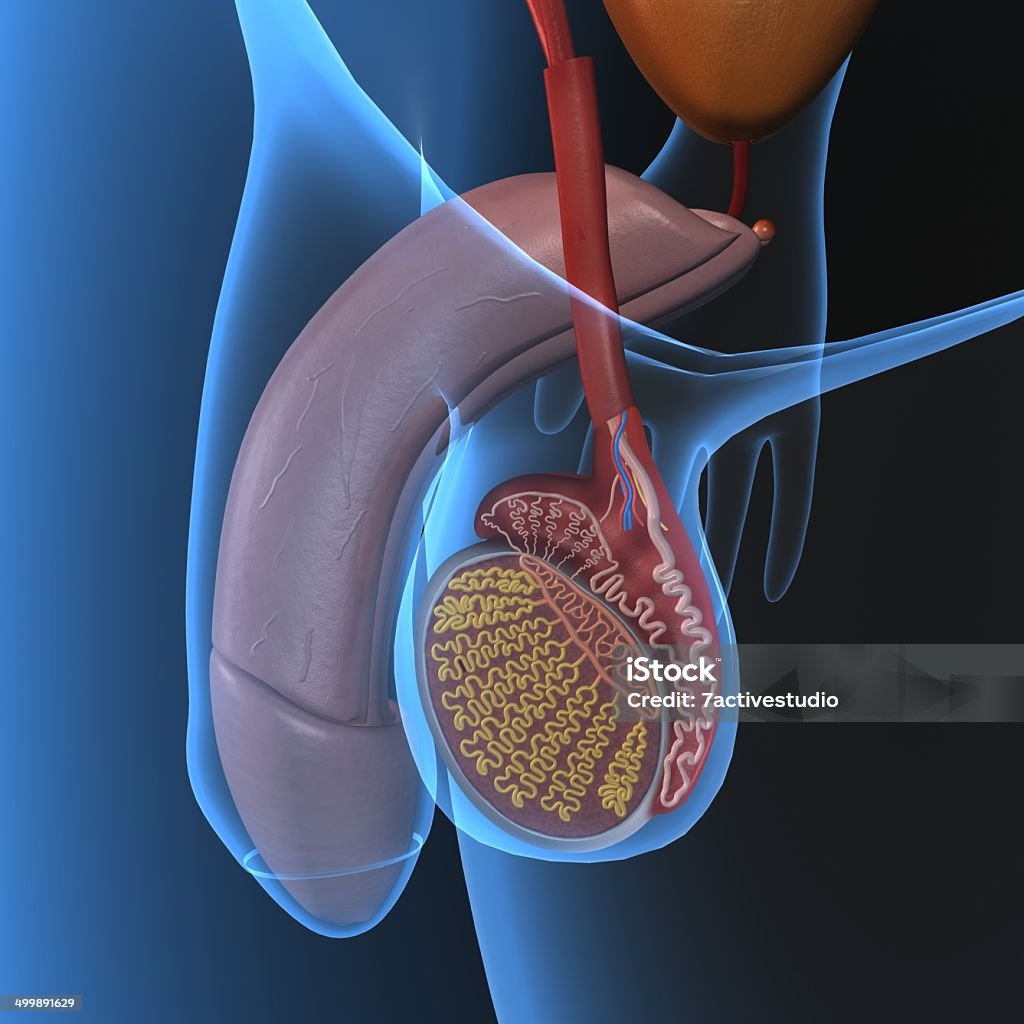 |
| The male reproductive system |
The male reproductive system, a complex and vital part of human biology, plays a pivotal role in perpetuating the species. Understanding its intricacies is crucial not only for academic purposes but also for personal health and family planning. In this in-depth guide, we will delve into the male reproductive system, discussing its various components, functions, and the physiological changes that occur throughout a man's life.
Anatomy of the Male Reproductive System
The Scrotum: Protecting the Testes
The male reproductive journey begins with the scrotum, a pouch-like structure comprising skin, connective tissue, and smooth muscle. It serves as a protective environment for the testes and is divided into two compartments, each housing one testis, one epididymis, and the testicular end of the spermatic cord.
The Testes: Male Gonads and Hormone Production
Often referred to as the male gonads, the testes are responsible for producing sperm and hormones. Their structure is remarkable, with the outer layer, the tunica vaginalis, encasing a fibrous middle layer known as the tunica albuginea, and an inner layer called the tunica vasculosa.
Seminiferous Tubules and Leydig Cells: Sites of Spermatogenesis
Within each testis, there are approximately 200-300 lobules, each composed of seminiferous tubules responsible for sperm production. Nestled amidst these tubules are Leydig cells, which produce testosterone during puberty, a hormone essential for male development.
Sperm: The Male Gamete's Structure and Function
Mature sperm are the end product of the testes' intricate work. These tiny cells consist of a head filled with a nucleus, a body packed with mitochondria for energy, and a long whip-like tail that propels them with remarkable efficiency.
Sustaining the Testes: The Spermatic Cord and Blood Supply
The Spermatic Cord: Supporting Testicular Function
The spermatic cord is responsible for suspending the testes within the scrotum and contains vital components like the testicular artery, testicular vein, testicular nerves, lymphatic vessels, and the vas deferens. This complex structure ensures the testes' health and functionality.
Blood Supply to the Testes: Oxygenation and Drainage
Oxygenated blood is carried to the testes through the testicular artery, while deoxygenated blood is drained away via the testicular vein. Interestingly, the left testicular vein drains into the left renal vein first, while the right testicular vein connects directly to the inferior vena cava. This unique blood supply is crucial for maintaining the testes' temperature and overall function.
The Journey of Sperm: Vas Deferens and Seminal Vesicles
Vas Deferens: The Sperm Highway
The vas deferens, a muscular tube, extends from the testes, passing through the inguinal canal, and runs towards the posterior wall of the bladder. Eventually, it connects with the duct of the seminal vesicle, forming the ejaculatory duct. This duct courses through the prostate gland to join the prostatic urethra, playing a vital role in sperm transport.
Seminal Vesicles: Nutrient-Rich Fluid Reservoir
The seminal vesicles, a pair of small fibromuscular pouches, release seminal fluid during ejaculation. This fluid constitutes a significant portion of ejaculated semen, about 60%, and provides nutrients to support sperm motility. Understanding the composition and function of seminal fluid is key to comprehending the male reproductive system's intricacies.
The Prostate Gland and Urethra
The Prostate Gland
Situated in the pelvic cavity in front of the rectum, the prostate gland surrounds the initial part of the urethra. It possesses an outer fibrous capsule, substantial smooth muscle, and glandular tissue covered with columnar epithelium. The prostate releases a milky fluid, accounting for 30% of ejaculated semen. This fluid contains an enzyme responsible for semen coagulation in the vagina, an intriguing aspect of the reproductive process.
Urethra: The Common Passage
The urethra is divided into three parts: the prostatic urethra, which traverses the prostate gland; the membranous urethra, which is the shortest and narrowest segment; and the penile urethra, which lies within the corpus spongiosum. It serves as a shared pathway for both urine and semen, with two distinct sphincters: the internal urethral sphincter, composed of smooth muscle, and the external urethral sphincter, made of skeletal muscle.
The Penis: Reproduction and Pleasure
The Structure of the Penis: Erection and Function
The penis is a fascinating organ with a root and a body. The root is situated in the perineum, while the body envelops the urethra. It comprises three cylindrical masses composed of erectile tissue and smooth muscle, richly supplied with blood. Understanding the anatomical structure of the penis is essential for comprehending its functions, including erection and ejaculation.
Erectile Tissue and Blood Supply: Mechanisms of Erection
The erectile tissue includes two corpora cavernosa located laterally and one corpus spongiosum, housing the urethra. The glans penis, a triangular structure, crowns the tip of the penis, while the prepuce (foreskin) lies just above it. The arterial blood supply to the penis is from the deep, dorsal, and bulbar penile arteries, branching from the internal pudendal artery. Venous drainage occurs via the internal pudendal vein. These vascular mechanisms are integral to the male reproductive process.
Erection and Ejaculation: The Dynamics of Sexual Response
Parasympathetic nervous stimulation triggers an increase in blood flow to the erectile tissue, resulting in an engorged and erect penis. Ejaculation, the process of semen expulsion, is driven by the contraction of the smooth walls of the vas deferens, thanks to sympathetic nervous stimulation. Semen is slightly alkaline, and a normal ejaculate contains about 2-5ml of semen, containing 40-100 million spermatozoa per milliliter.
Accessory Glands and Their Role
Bulbourethral Glands: Contributions to Ejaculate
Situated at the base of the penis, these small glands, found posterior and lateral to the membranous urethra, secrete pre-ejaculate fluid during sexual arousal. Functionally, they are equivalent to the Bartholin's glands in females. These glands play a role in the male reproductive process and contribute to the complexity of semen.
Puberty and Hormonal Regulation
Hormones in Male Puberty: Initiating Reproductive Changes
At the onset of puberty, hormonal changes kick-start the male reproductive system. Follicle-stimulating hormone (FSH) from the anterior pituitary gland acts on the seminiferous tubules to initiate the production of spermatozoa. Luteinizing hormone (LH), also from the anterior pituitary, stimulates Leydig cells to produce testosterone, a hormone essential for male secondary sexual characteristics.
Spermatogenesis: The Art of Sperm Production
Spermatogenesis is the remarkable process by which sperm cells are generated within the seminiferous tubules of the testes. This process begins at puberty and continues throughout a man's life. Spermatogenesis involves a series of complex cellular divisions and differentiating stages, starting from spermatogonia and culminating in mature sperm. Each sperm cell is a tiny masterpiece with a specific shape and function. Understanding the nuances of spermatogenesis is crucial to comprehend the male reproductive system fully.
Male Reproductive Hormones: Orchestrating Function
Hormones play a pivotal role in orchestrating the male reproductive system. Apart from testosterone and FSH, there are several other hormones involved, including inhibin, which regulates FSH production, and prolactin, which influences testosterone production. The interplay of these hormones is vital for maintaining the delicate balance required for the proper functioning of the male reproductive system.
Sexual Response and Fertilization
Exploring the male reproductive system wouldn't be complete without delving into the intricacies of sexual response and fertilization. The process of sexual response, from arousal to climax, involves a complex interplay of physiological and psychological factors. Additionally, understanding the union of sperm and egg during fertilization is essential. We can explore the journey of sperm through the female reproductive system and the various steps involved in fertilization.
Male Reproductive Health and Disorders
It's essential to address male reproductive health and potential disorders that can affect it. This chapter can encompass various topics, including common reproductive health issues, such as erectile dysfunction and infertility. Exploring preventive measures and lifestyle factors that contribute to reproductive health would provide valuable insights. Additionally, we can discuss more severe conditions, such as testicular cancer, and how early detection and treatment are critical.
The Male Reproductive System in Aging
Aging has significant effects on the male reproductive system. The gradual decline in testosterone levels, known as andropause, can lead to various physiological changes. Discussing these age-related changes and their impact on fertility and overall reproductive health is important.
The Evolutionary Perspective
Taking a step back to look at the male reproductive system from an evolutionary standpoint can provide a broader context. Understanding how the male reproductive system has evolved over time and the role it plays in the survival and propagation of the species is a fascinating aspect to explore.


Comments
Post a Comment